-
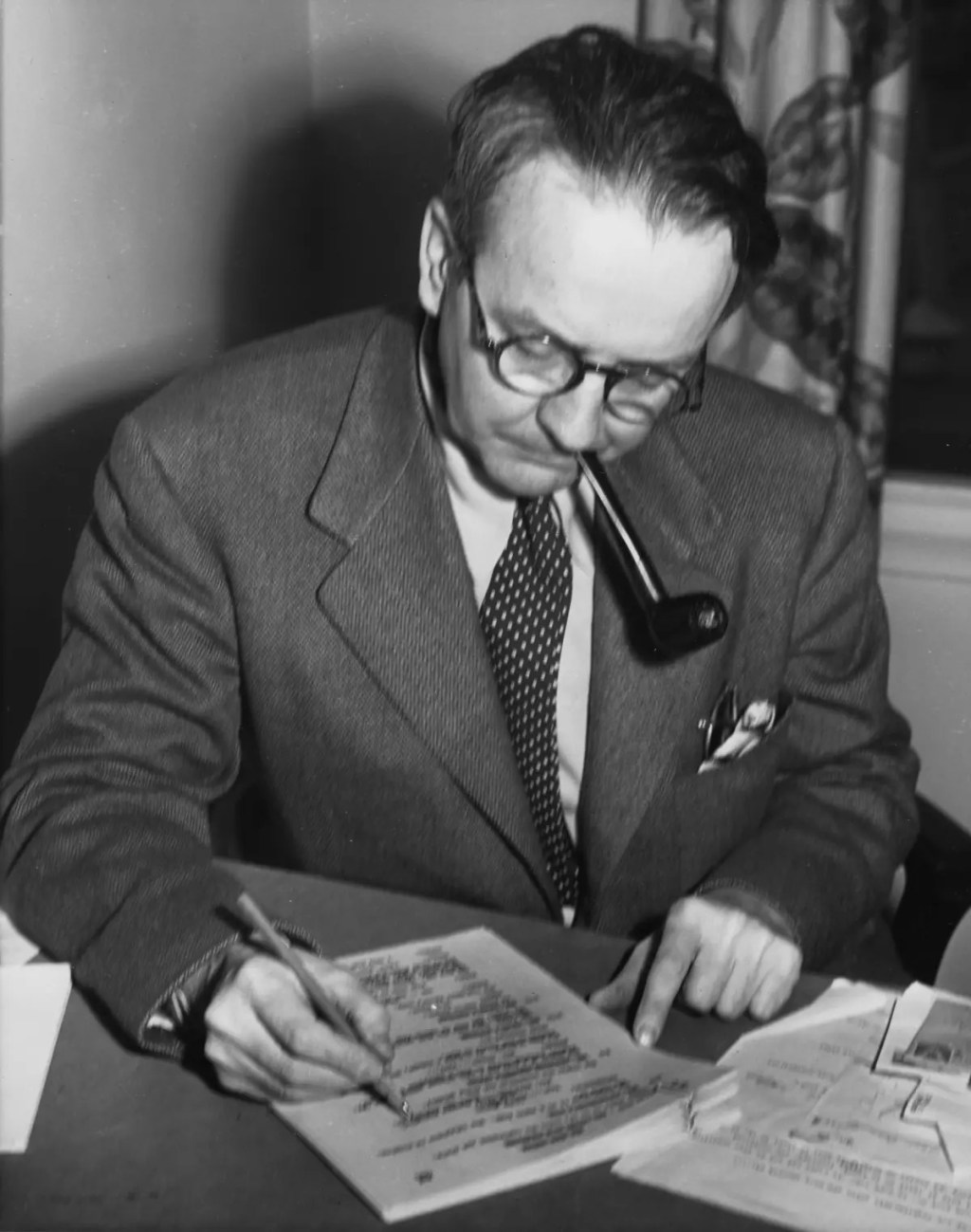
Chandler’s novels were soon made into films, and Chandler also worked as a screenwriter in Hollywood. Some the films based on his novels and on his screenplays became classic film noir. Most of these films are now available online thanks to archive.org and other websites, but they may take a few seconds to load. If
-

At Frankfurt book fair 2025, I spoke to Simone Menzies about Raymond Chandler. She told me that she had really enjoyed reading Chandler in East Berlin back in the 1980s. Never before had it occurred to me that Chandler had been read behind the Iron Curtain in the former GDR as well. After all, the
-

She is and has always been my favourite female character in Chandler’s entire oeuvre: Anne Riordan. She’s cool, intelligent, pretty and autonomous. Speir calls her “one of Chandler’s strongest, most independent, most likeable female characters.” (p. 113). In his article “Anne Riordan: Raymond Chandler’s Forgotten Heroine”, David Madden goes so far as to call her
-

As early as in 1949 the critic Gershon Legman claimed in Love and Death: A Study in Censorship: “Chandler’s Marlowe is clearly a homosexual – a butterfly, as the Chinese say, dreaming that he is man” (quoted in Mason p. 97). To Michael Mason The Long Goodbye is “more emphatically, even overtly a novel of homosexual feeling than
-

Margaret Atwood (©Alasdair McLellan) Simone Buchholz (©Gerald von Foris) Judith Freeman (©Anthony Hernandez) to be continued
-

Fat prosperous cops with Chamber of Commerce voices This type of character is depicted in a somewhat stereotypical and two-dimensional manner. The group of characters in question comprises Police Commissioner Randy Starr in The Long Goodbye, Chief of Police Wax in Farewell, My Lovely and Sheriff Petersen in The Long Goodbye. Randy Starr is the
-

“Police business is a hell of a problem. It’s a good deal like politics. It asks for the highest type of man, and there’s nothing in it to attract the highest type of men. So we have to work with what we get and we get things like this.” (The Lady In The Lake, p.151)
-

In July 1958, the BBC brought Ian Fleming and Raymond Chandler on air together to mark the publication of Chandler’s last book Playback. Here are Fleming’s recollections of that particular day: About this time, Chandler and I were booked to give a 20-minute broadcast for the BBC on ‘The Art of Writing Thrillers’. When the
-
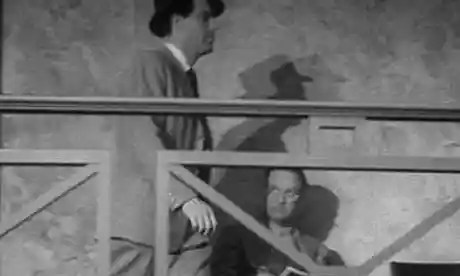
Adrian Wooton of the Guardian is right to point out that it is thanks to American writer Mark Coggins, tipped off by John Billheimer, and French journalist Olivier Eyquem that we know that Chandler has a tiny cameo in Billy Wilder’s 1944 movie Double Indemnity. It’s just unmistakeably him. I’d lay money on it,’ says
-
Subscribe
Subscribed
Already have a WordPress.com account? Log in now.
 Raymond Chandler Dead men are heavier than broken hearts